Godzilla Minus Zero
Bunnykill
Movie

Saving agent Godzilla
Godzilla Minus Zero (2026) takes place in 1949, two years after the events of Godzilla Minus One (2023), which I am yet to watch. Japan is still recovering from the Second World War, and the consequences of that conflict are present throughout the movie.
Right off the bat, I was intrigued by the cinematography. Japanese filmmaking has a rather distinct style, especially when it comes to acting and dramatic expression. The performances are often exaggerated, sometimes to the point where they feel amateurish. I suspect much of this comes down to cultural differences and theatrical traditions. Taking that into account, the acting works reasonably well, although some scenes would have benefited from a more restrained approach.
The sound design and visual effects, however, are astonishing. What impressed me most was the visual presentation. The movie has an almost documentary-like appearance, with muted colors, low saturation, and an overall rather bleak aesthetic. It fits the post-war setting, but it also gives the visual effects an interesting advantage. The creatures and destruction stand out without looking completely disconnected from their surroundings.
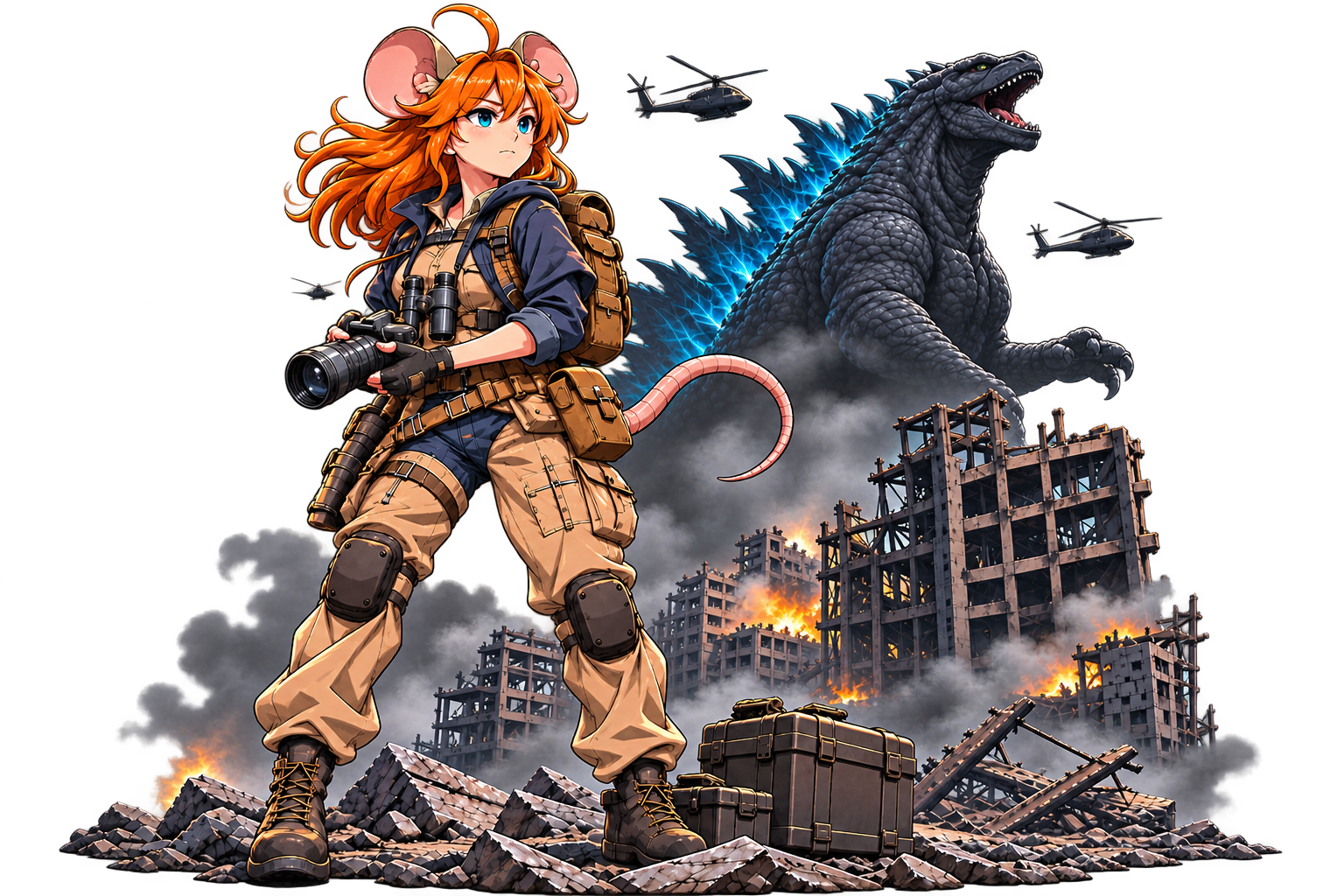
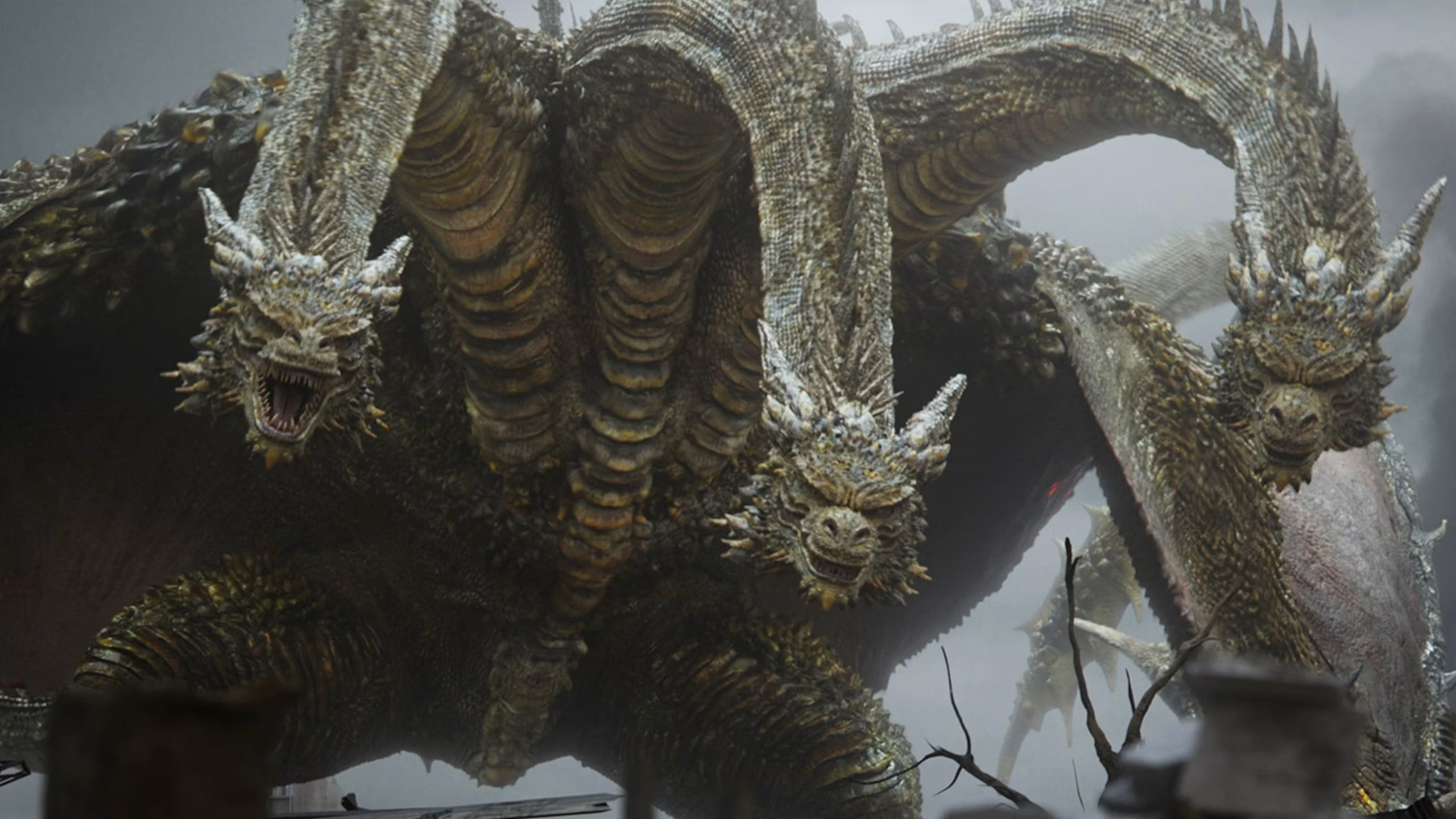
The monsters themselves look exquisite. Their designs are convincing, and the effects surrounding them are exceptionally well executed. What impressed me most was their sense of scale. Everything, from their movement and interaction with the environment to the sound of their sheer mass, contributes to making them feel enormous. You can practically feel their weight, and the sound design deserves particular credit for that. These creatures genuinely feel huge, which makes their presence on screen all the more intimidating.
What I unfortunately didn't particularly enjoy were the fights themselves. Don't get me wrong, they're epic, and some of the destruction looks fantastic. Unfortunately, they're also rather short, and certain moments make little sense, even within the movie's own established logic. The film spends considerable effort building a dramatic, grounded atmosphere, only for some of the action sequences to disregard that realism when it's convenient. It occasionally broke my immersion, which is unfortunate considering how convincing the rest of the presentation is.
The post-war atmosphere deserves praise. The architecture, clothing, military presence, and general condition of Japanese society create a convincing picture of a country still dealing with the consequences of a devastating war. I found this aspect of the movie consistently immersive, and unlike the action, it rarely gave me a reason to question what I was seeing.
The characters also deserve some credit. Their personal histories and relationships are established gradually, and although I wasn't particularly invested in them at first, they eventually grew on me. By the time the family faces its hardest moment in the movie, the emotional weight of everything they've been through finally catches up with you. It's difficult not to feel for them. I appreciated that the story managed to earn that reaction rather than simply relying on dramatic performances to force it.
There's also a political layer running through the story, particularly concerning the tensions between Japan and the United States. I suspect some of this carries over from Godzilla Minus One, although the political themes themselves go back much further, possibly to the original Godzilla (1954) and its relationship with nuclear warfare and post-war Japan.
It's an interesting aspect of the film, but the English-speaking characters are a problem. Their English is horrible. The delivery frequently sounds unnatural, and I found it difficult to believe that some of these characters were supposed to be Americans. I don't know whether the actors are native English speakers struggling with their performances or simply actors poorly suited to their roles. Either way, the result is distracting, particularly in a movie that otherwise puts so much effort into making its historical setting believable.
So far, my biggest appreciation for Godzilla Minus Zero comes from its technical presentation and atmosphere. The monsters look fantastic, their scale is convincing, and the sound design gives them a physical presence that few monster movies manage to achieve. The exaggerated acting takes some getting used to, and the action occasionally undermines the realism the movie works so hard to establish. The characters, however, manage to leave an emotional impression, particularly when the story finally puts their relationships to the test. There's quite a lot here that I enjoyed, even without having seen its predecessor.
4
0
#Ghidora #Godzilla #Monsters #Epic #Huge #Drama #Japan