Aliens
Review might contain spoilers!
Bunnykill
Movie
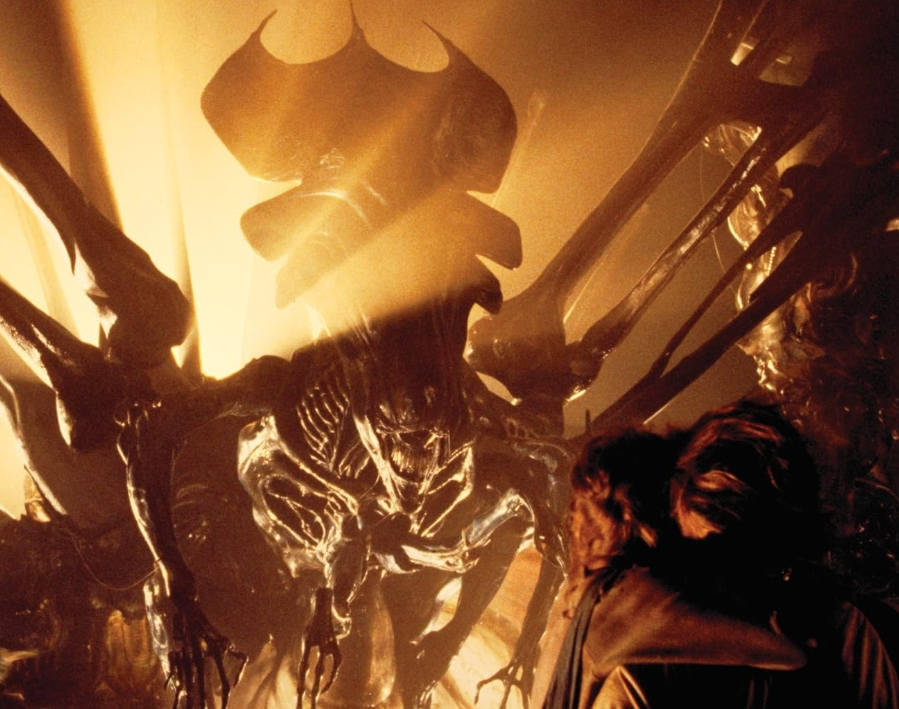
Fight of the queens ends with airlock again
Aliens picks up right after Alien (1979), bringing back main character Ellen Ripley, who is discovered in cryo-sleep after 57 years. Now plagued by nightmares of the Xenomorphs, she struggles with trauma and loss. The extended cut further deepens her character, revealing details about her past, including her daughter. This addition greatly enhances the emotional weight of the story.
The film starts off fast and dramatic, with Ripley facing a tribunal. She is not charged with any crimes, but her warnings about the Xenomorphs are dismissed. We learn that the planet where the eggs were originally discovered is now home to a colony of terraforming families. As expected, the dormant eggs remained undisturbed-until the colonists unknowingly triggered their hatching.
This narrative flows well, moving forward without feeling forced or reliant on deus ex machina moments. The introduction of Weyland-Yutani Corporation (if we disregard the later prequels) further expands the universe and solidifies the company's role in the franchise's lore.
Cinematography and editing are a step up from Alien (1979), with tighter pacing and better camera work. While the special effects remain somewhat stagnant for the time, the effort is visible and appreciated.
The writing is stronger, though the characters are still somewhat average. Ripley continues to be the smartest and most competent among them, solidifying her as one of sci-fi's greatest protagonists.
One inconsistency, introduced by later films, involves actor Lance Henriksen, who plays the android Bishop in this movie. He later appears in Alien vs. Predator (2004) as the head of Weyland-Yutani, creating confusion in the continuity. Additionally, actor Bill Paxton appears in both Aliens and Predator 2, making it difficult to reconcile these stories within a shared universe. These issues aren't a fault of Aliens (1986) itself but highlight complications in later attempts to connect the franchises.
The film introduces key elements that expand the lore, most notably the Alien Queen, a massive breeder and ruler of the Xenomorph hive. This revelation is crucial, adding depth to their life cycle and hierarchy.
However, there are some questionable details. These small moments slightly hinder the film's overall quality.
One thing Aliens does exceptionally well is its unapologetic approach to storytelling. It doesn't shy away from dark themes, including children being in danger, which adds to the raw intensity of the film.
Visually, Ripley's character maintains the strong, action-driven presence of the first film. The movie doesn't push an overt agenda, but it's easy to see why Sigourney Weaver became an icon of the era. The sweat-drenched, high-intensity sequences and her no-nonsense attitude help solidify her status as one of cinema's most memorable heroines.
The film does suffer from some typical '80s tropes, like inaccurate time-based tension and occasional over-the-top moments. The child character, Newt, sometimes struggles with acting, but overall, she plays her role well enough.
In the end, Aliens (1986) is an entertaining, well-crafted sequel that improves upon the original in many ways. It successfully blends action and horror while staying true to the franchise's core themes.
0
0
#Alien #Scifi #Invasion #Adventure #Mystery #Horror #Sigourney #Weaver #Aliens #Sequel